
Outfitting a Hybrid Workplace: Office Furniture Delivery and Installation in Toronto
The hybrid office is no longer an experiment — it's the standard for most Toronto businesses. But designing and furnishing a workspace that genuinely supports hybrid work is a different challenge than simply filling desks. It requires thoughtful procurement, careful logistics, and professional installation that accounts for how people actually use the space. And it requires a delivery and installation partner who understands that an office fitout isn't just a moving job — it's the foundation of how your team will work for years to come.
What Hybrid Work Actually Demands from an Office Space
The shift to hybrid work has changed what Toronto offices need to do. When people come in two or three days a week rather than five, the office has to justify the commute. That means it needs to offer something people can't replicate at home — collaboration space, focus zones, social energy, and the kind of professional environment that supports deep work and meaningful connection.
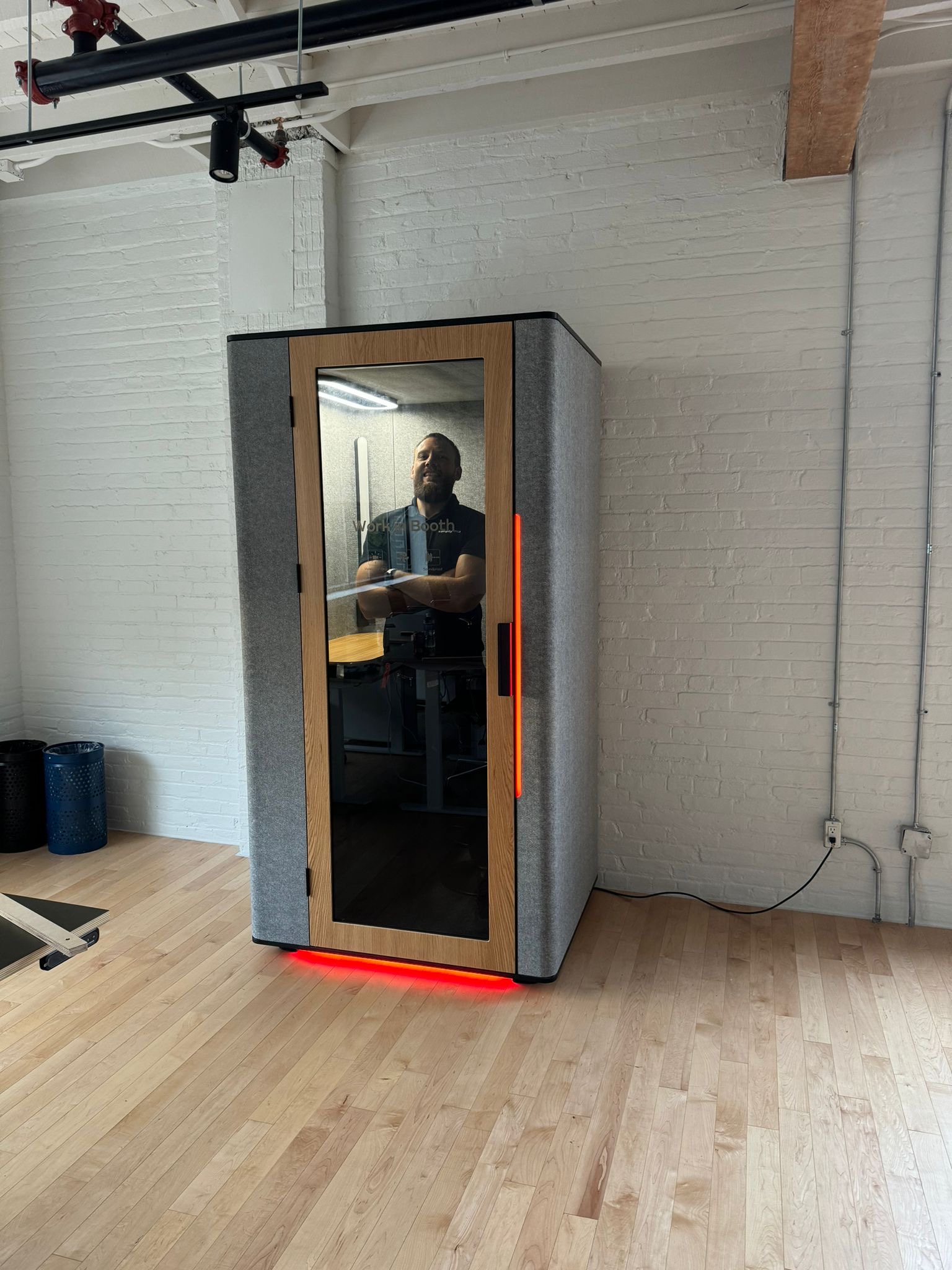
Practically speaking, this translates into a different mix of furniture than the traditional desk-per-person model. Hybrid offices typically need more flexible seating — modular sofas, lounge chairs, soft-seating clusters — alongside reconfigurable meeting tables, acoustic privacy panels, standing desk options, and dedicated collaboration zones with writable surfaces or presentation equipment. The one-size-fits-all rows of workstations that defined offices a decade ago have given way to layered environments with distinct zones for different types of work.
All of this is harder to install than a simple run of desks. It requires coordination, sequencing, and careful attention to how pieces relate to each other and to the space. It requires a team that can execute a complex installation plan accurately — not just deliver boxes to a loading dock.
The Logistics Challenge of a Corporate Office Fitout in Toronto
Office furniture delivery and installation in Toronto comes with a set of logistical challenges that are distinct from residential work, and distinct again from smaller commercial jobs.
Building access and freight coordination. Most commercial buildings in downtown Toronto and across the GTA have strict freight elevator schedules, loading dock booking requirements, and rules about when deliveries can occur. A team that doesn't know how to work within these constraints — or doesn't plan for them — will find itself waiting, rescheduling, or creating friction with building management on your behalf.
Multi-floor and multi-zone installations. A typical hybrid office fitout might span two or three floors, with different furniture types and configurations on each. Coordinating that kind of installation — ensuring the right pieces go to the right locations, that assembly happens in the right sequence, and that the team isn't creating bottlenecks in high-traffic areas — requires genuine project management capability, not just strong backs and a truck.
Tight operational windows. Businesses can't afford to have their offices unusable for days while an installation drags on. Most corporate clients need their fitout completed over a weekend, during a planned office closure, or in phased sections that keep parts of the space operational throughout. A professional office furniture installation team in the GTA builds their schedule around your operational needs — not the other way around.
Multi-vendor coordination. A hybrid office fitout rarely comes from a single supplier. Workstations from one manufacturer, soft seating from another, storage solutions from a third, acoustic panels from a fourth. Each has its own delivery schedule and lead time. Without a delivery and installation partner who can coordinate all of these into a coherent plan, you end up managing a complex logistics puzzle on top of everything else an office move involves.
Why Professional Installation Matters More for Hybrid Offices
The complexity of hybrid office furniture — modular systems, height-adjustable desks, interconnected storage, acoustic panels with integrated power — means that installation quality has a direct impact on how well the space functions.
A height-adjustable desk that isn't assembled correctly won't operate smoothly, and will need service calls that disrupt your team. Modular seating that isn't configured as specified will look wrong and feel wrong. Storage systems that aren't level or properly anchored create safety issues. These aren't edge cases — they're the natural result of installation work done without the right skills or the right attention to detail.
Professional furniture installation teams bring the technical knowledge to assemble complex systems correctly the first time, the tools to do it efficiently, and the quality-checking discipline to make sure everything is right before they leave. For a business investing significantly in its workspace, this isn't a luxury — it's the difference between a fitout that delivers on its promise and one that creates ongoing maintenance headaches.
There's also a timing dimension. Every day your office is mid-installation is a day of disruption. A professional team that can execute a 40-workstation fitout over a single weekend — with everything in place, assembled, and tested by Monday morning — delivers value that goes well beyond the installation itself. Your team walks in on Monday and gets to work. That continuity of operations has a real cost attached to it, and professional installation is what makes it possible.
What to Expect from Grey Peacock on a Corporate Fitout
Grey Peacock has been handling office furniture delivery and installation across Toronto and the GTA for over eight years, working with businesses of every size — from startups outfitting their first proper office to established corporations reconfiguring multiple floors of commercial space.
Our approach to corporate fitouts is built around a few core commitments. We coordinate with building management on freight access and elevator scheduling before the job starts — not on the day. We work from your installation plan and placement drawings, and we ask the right questions upfront so there are no surprises during execution. We handle multi-vendor deliveries as a single coordinated operation, not as a series of disconnected drop-offs.
We also understand that office installations often happen under time pressure. Whether you're moving into a new space, reconfiguring an existing one, or expanding into additional floors, we build our schedule around your operational requirements. Our team works efficiently, communicates clearly throughout the job, and doesn't leave until everything is in place, assembled correctly, and the space is clean and ready to use.
For businesses that are also managing the relocation of existing furniture — moving pieces from one floor to another, decommissioning old workstations, or reconfiguring layouts while maintaining partial operations — we handle that coordination as part of the same engagement. One partner, one point of contact, one consistent standard of work across the entire project.
Planning Your Hybrid Office Fitout: Key Considerations
If you're planning an office furniture fitout in Toronto — whether it's a full new-space installation or a reconfiguration of an existing office — here are the questions worth working through before you start:
- What's the operational window? Identify the dates when the installation can happen without disrupting your team. Build your procurement and delivery schedule backward from that window.
- What are the building's freight access requirements? Confirm elevator booking procedures, loading dock availability, and any restrictions on delivery hours with building management before you finalise your installation schedule.
- Are all vendors aligned on delivery timing? If you're sourcing from multiple suppliers, confirm that all pieces will be on-site before the installation window begins. A fitout stalled because one vendor is two weeks late is a preventable problem.
- Who is managing installation coordination? Someone needs to own the plan — the sequence, the placement, the quality check at the end. If that's not your facilities team, make sure your installation partner is set up to take that role.
- What happens to existing furniture? If you're replacing old workstations or reconfiguring existing pieces, plan for removal and disposal or reallocation as part of the same operation.
The Bottom Line
Outfitting a hybrid office in Toronto is a significant investment — in the space, in the furniture, and in the work environment you're creating for your team. Getting the delivery and installation right is what turns that investment into a workspace that actually works.
At Grey Peacock, we work with Toronto businesses at every stage of that process — from coordinating multi-vendor deliveries to executing complex multi-floor installations under tight operational windows. If you're planning a hybrid office fitout in Toronto or anywhere across the GTA, we'd be glad to talk through what your project involves and how we can help.